
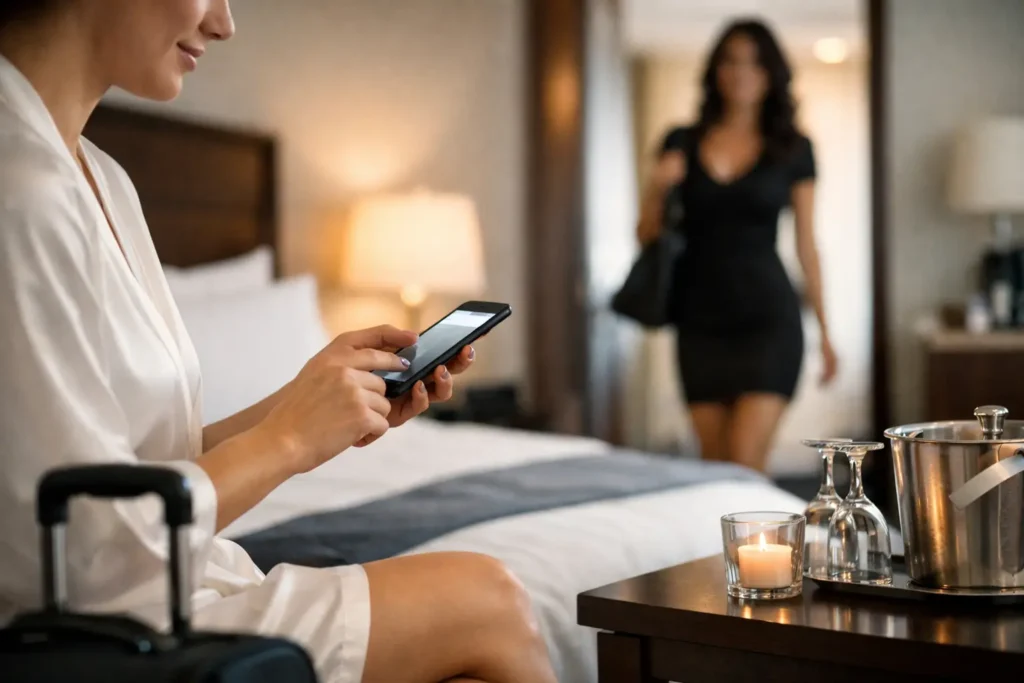
A hotel room can be convenient for a late-night massage, grooming appointment, private fitness session, or other lawful mobile service. But how hotel outcall booking works is not simply a matter of choosing a provider and giving them a room number. Hotel access, local regulations, guest registration, provider credentials, payment terms, and personal safety all shape whether an appointment can happen without trouble.
For travelers, the best approach is straightforward: confirm the hotel’s visitor policy before arranging anything, use legitimate providers who clearly identify their service, and keep every interaction respectful and lawful. Privacy matters, but so do property rules. A hotel is a private business, and its security team can refuse visitor access at any time.
How hotel outcall booking works from request to arrival
Hotel outcall booking usually starts with a service request made directly to a legitimate mobile provider or through an authorized booking channel. The guest shares basic details such as the hotel name, preferred date and time, type of service requested, and the number of people attending. A professional provider should be able to explain what is included, how long it takes, the total price, cancellation terms, and any preparation required.
The next step is confirmation. Some providers will ask for a booking deposit, while others accept payment after arrival. Either way, a clear written confirmation helps avoid confusion. It should state the appointment time, expected duration, price, and whether taxes, travel charges, equipment fees, or parking fees apply.
Guests should avoid sharing a room number too early. Give the hotel name first, confirm that the appointment is accepted, and only provide arrival instructions when the provider is already at the property or when hotel policy requires pre-registration. This protects privacy without creating unnecessary friction for hotel staff.
Hotel visitor rules come first
Every hotel handles outside visitors differently. A large business hotel may require all visitors to check in at the front desk and show government-issued identification. A boutique property may allow visitors to proceed after the registered guest confirms their name. Some hotels prohibit outside service providers entirely, particularly at certain hours or in properties with strict security procedures.
Before booking, call the front desk and ask a simple, neutral question: are licensed mobile service providers allowed to meet a registered guest in the room? Ask whether the visitor must register, present ID, pay a visitor fee, or be escorted upstairs. You do not need to provide personal details that are irrelevant to the policy.
Do not pressure staff to bend rules. Trying to bypass lobby security, using a side entrance, or telling a provider to avoid registration can result in denied entry, a canceled appointment, or issues with your stay. A discreet arrangement is one that respects the hotel’s process, not one that tries to defeat it.
What legitimate providers should confirm
A credible mobile service provider communicates clearly before travel begins. They should identify the lawful service being offered, provide a realistic arrival window, and explain any limitations. For example, an in-room massage provider may need adequate floor space and may not be able to work in a room shared by several guests. A grooming professional may need access to a chair, table, outlet, or bathroom sink.
Professional conduct is a strong signal. The provider should not make vague promises, demand sudden additional payments after confirmation, or refuse to explain the basic terms of the appointment. They should arrive with the necessary equipment, follow building rules, and respect the agreed time. Guests should offer the same standard of courtesy in return.
Identity verification can feel formal, especially for visitors on a short stay, but it is normal. Hotels must protect their guests, and legitimate providers also need to know they are arriving at a real booking. Keep verification limited to what is reasonably necessary. Never send sensitive financial documents, passwords, hotel reservation codes, or unnecessary personal records through an informal chat.
Timing is more than a convenience issue
Arrival timing affects the whole experience. Lobby staffing changes at night, elevators may require key-card access, and some hotels tighten visitor rules after a certain hour. A provider delayed by traffic, weather, parking, or a busy front desk should communicate promptly rather than disappear without explanation.
Build in a reasonable buffer. If your booking is for 8:00 p.m., confirm whether that means the provider arrives at the hotel at 8:00 or begins the service at 8:00. Those are different commitments. At large Kuala Lumpur properties, getting from parking to reception and then through elevator access can add time.
If you are checking in late, wait until you have your room confirmed before finalizing the appointment. Likewise, if you are near a major transport hub or airport-linked hotel, expect that access rules may be more controlled than at a standard city-center property.
Payment, cancellations, and common misunderstandings
Price confusion is one of the fastest ways for a hotel outcall booking to go wrong. Confirm the full rate before the provider travels. Ask whether the quoted amount covers travel, parking, supplies, service time, and any applicable taxes. If a deposit is required, make sure the remaining balance is clear and that the cancellation policy is stated before money changes hands.
A guest should not assume that an extra half-hour, a room change, or a different hotel location is automatically included. A provider should not assume that a guest will accept surprise surcharges. Clear expectations protect both sides.
Cancellations need the same level of respect. If your plans change, notify the provider as soon as possible. Last-minute cancellations can leave a mobile professional with travel costs and a lost appointment slot. On the other hand, if the provider changes the agreed terms, arrives far outside the confirmed window without communication, or cannot comply with hotel policy, you are entitled to decline the service.
Privacy, safety, and lawful boundaries
Privacy does not mean abandoning common sense. Keep valuables secured, use the hotel’s door viewer before opening the door, and do not allow an unconfirmed person into your room. If the hotel asks for visitor registration, comply with the process. If anything about an interaction feels coercive, deceptive, or unsafe, end it and contact hotel security.
Guests should also understand that local laws matter. Hotels do not override Malaysian law, building policy, licensing requirements, or public-safety rules. Services that are illegal, exploitative, non-consensual, or outside a provider’s lawful professional scope should not be arranged. Responsible booking means choosing services that can be delivered openly within those boundaries.
Respect is practical, not just polite. Do not photograph or record a provider without explicit permission. Do not request services outside the agreed scope. Do not involve additional people without prior agreement. A calm, professional appointment depends on clear consent and clear limits from the first message to the final payment.
A better way to plan an in-room appointment
The most reliable hotel outcall booking is planned around the property, not around guesswork. Confirm the visitor policy first, select a legitimate provider second, and settle the appointment details before anyone travels. This order saves time and reduces awkward conversations in the lobby.
For business travelers and short-stay guests, it also helps to book during normal operating hours when possible. Front desk teams are fully staffed, providers have more predictable travel conditions, and any access question can be resolved quickly. Late-night requests may still be possible depending on the hotel and service, but they usually involve more uncertainty.
A hotel room should make a lawful mobile service more convenient, not more complicated. Choose clarity over secrecy, confirm the terms before arrival, and treat hotel staff and providers with the same professionalism you expect from them. That is the simplest way to protect your time, privacy, and peace of mind.